Artist
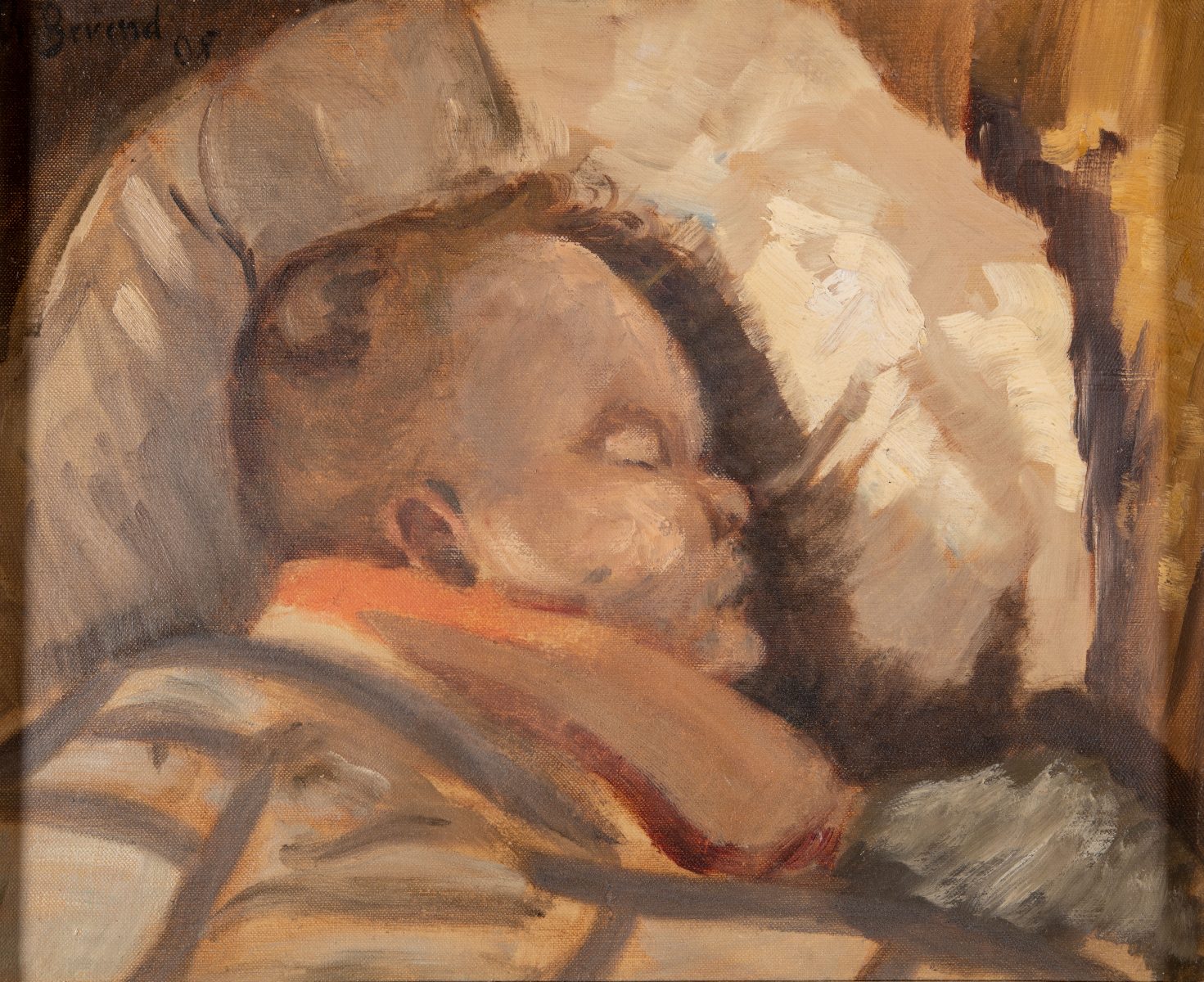
Sleeping Child
|
1908
Berend-Corinth, Charlotte
1880
Berlin (DEU)
-
1967
New York (USA)
Charlotte Berend was a multifaceted artist in her own right, in addition to being a pillar of support for her husband, the acclaimed Impressionist painter Lovis Corinth (1858–1925). Born the daughter of a Jewish businessman, Berend met all the prerequisites for a career as an artist, at least from today’s perspective. In the late nineteenth and early twentieth century, however, women artists faced many more obstacles than their male colleagues. Since most art academies had yet to open their doors to women, they had to content themselves with private art schools or schools of applied arts, which were nowhere near as prestigious as the official academies of fine arts.
Berend, for example, had to have her father’s permission before seeking admission to the Königliche Kunstschule zu Berlin (Royal School of Art in Berlin) in 1898. Its drawing classes had been open to women since 1874, yet Berend, after passing the entrance examination, was one of only two women to be admitted that year. Later, she was allowed to receive further training at Berlin’s Kunstgewerbemuseum (Museum of Decorative Arts), where she was given special permission to attend the nude drawing class, normally reserved for “gentlemen”.
However, her situation changed radically after her father lost his fortune and took his own life. Financial hardship forced Berend to switch to the private painting school for women recently opened by Lovis Corinth, which limited her career options but was at least affordable. Having begun as Corinth’s pupil, she soon became his model and eventually his lover. When they married in 1904, Berend, as a modern woman, took a double-barrelled name. Their son Thomas (1904–1988) was born later that same year, their daughter Wilhelmine (1909–2001) five years later.
Preoccupied with her domestic duties as both a mother and the wife of a successful artist, Berend-Corinth had little time to devote to her own art, though she remained as ambitious as ever. In 1906 she joined the Berlin Secession as one of only four women to be accepted that year. She also continued to sit for her husband – some ninety times in their twenty years together. When Corinth suffered a stroke in 1911, she nursed him back to health, yet when the family took up residence in their new summer home in Urfeld on the Walchensee in Bavaria, he forbade her from painting there and claimed the landscape for his canvases alone. Berend-Corinth nevertheless made some secret sketches and, in 1924, was appointed to the board of the Berlin Secession, as her husband had been in 1911.
Corinth died in 1925. Berend-Corinth published his autobiography in 1926 and organised a memorial exhibition at Berlin’s National Gallery. She also commenced work on his catalogue raisonné. In 1927 she opened a painting school of her own in Berlin and began exhibiting her works in Germany, Italy, and the United States. The early days of her widowhood were spent mainly in Italy, at least until the anti-Jewish racial laws passed by Benito Mussolini (1883–1945) forced her to flee. After a sojourn in Switzerland, she left Europe in 1939 and emigrated to New York, where her son had been living since 1931.
Despite the political upheavals, Berend-Corinth remained active in Germany even after the National Socialists seized power, and works of hers were included in the 1934 exhibition Die Deutsche Frau (The German Woman) in Münster. Just a few years later, however, a painting of hers at the Städtische Galerie in Nuremberg was declared “degenerate” and removed. She built a new life for herself in America and in 1943 opened a second painting school in New York which she continued to run until 1955. Das Kunstwerk "Traubenstillleben" wartet noch auf eine Kunstpatenschaft! Durch die Übernahme einer Kunstpatenschaft profitieren Sie von zahlreichen Vorteilen, wie beispielsweise einer persönlichen Urkunde, die Ihre Kunstpatenschaft dokumentiert, sowie einer detaillierten Objektbeschreibung und Künstlerbiographie. Auf Wunsch wird Ihre Patenschaft zudem bei Ausstellungen und auf unserer Website erwähnt. Und das ist nur ein kleiner Teil der exklusiven Vorteile, die Sie erwarten. Mehr Informationen erhalten Sie here! Weiterführende Informationen finden Sie in unserem Sammlungskatalog „Wir werden euch nicht Vergessen. Die Verlorene Generation. Ihre Kunst. Ihre Geschichten“. Dieser ist here erhältlich.
artworks
Sleeping Child
Oil on canvas on cardboard
26,5 × 32,5 cm
1908
Berend-Corinth, Charlotte
|
Sleeping Child
1908
Oil on canvas on cardboard
26,5 × 32,5 cm
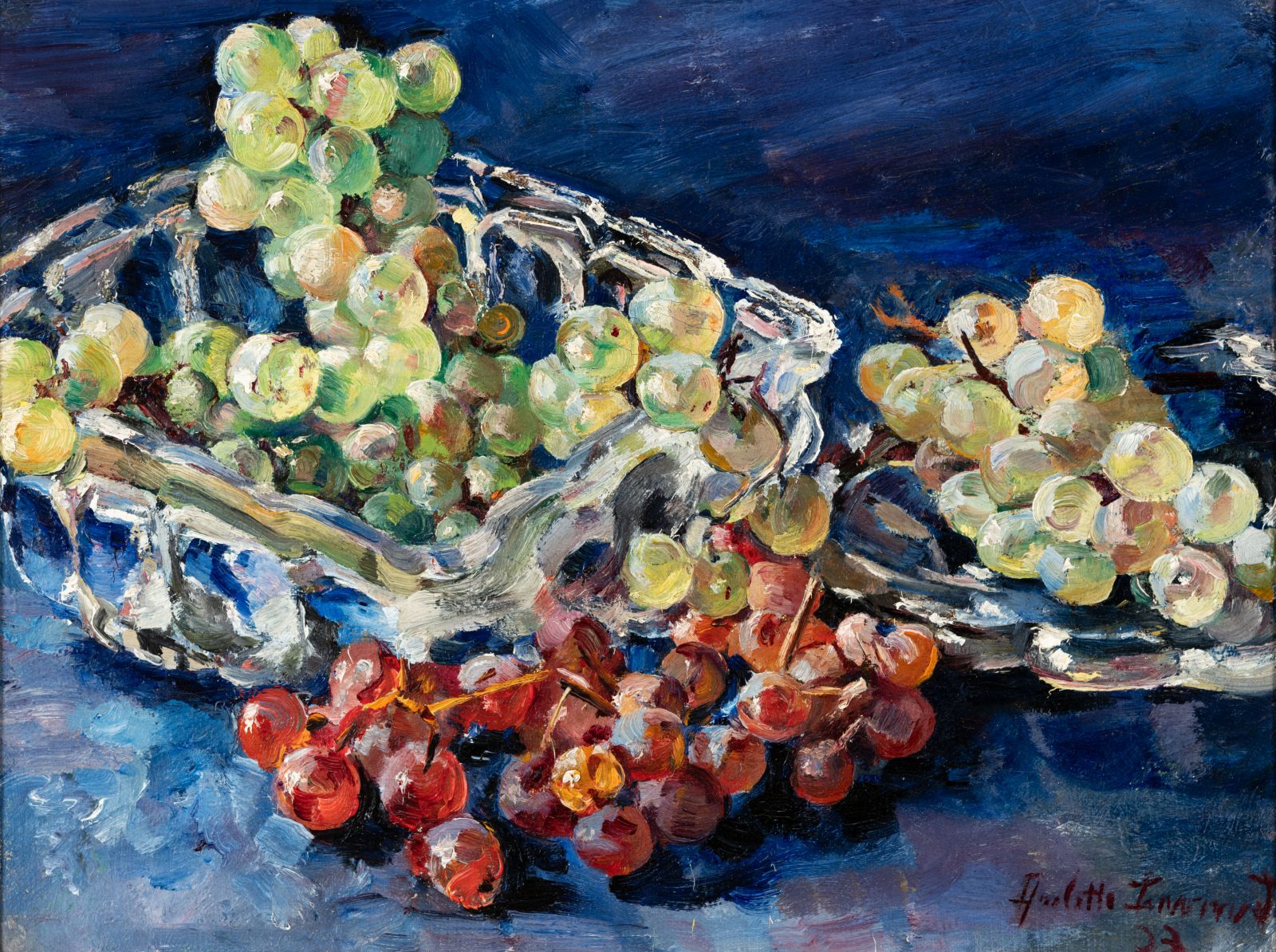
Still Life with Grapes
Oil on canvas
30 × 40,5 cm
1923